How to actually choose between Inpatient Rehab and Outpatient Programs
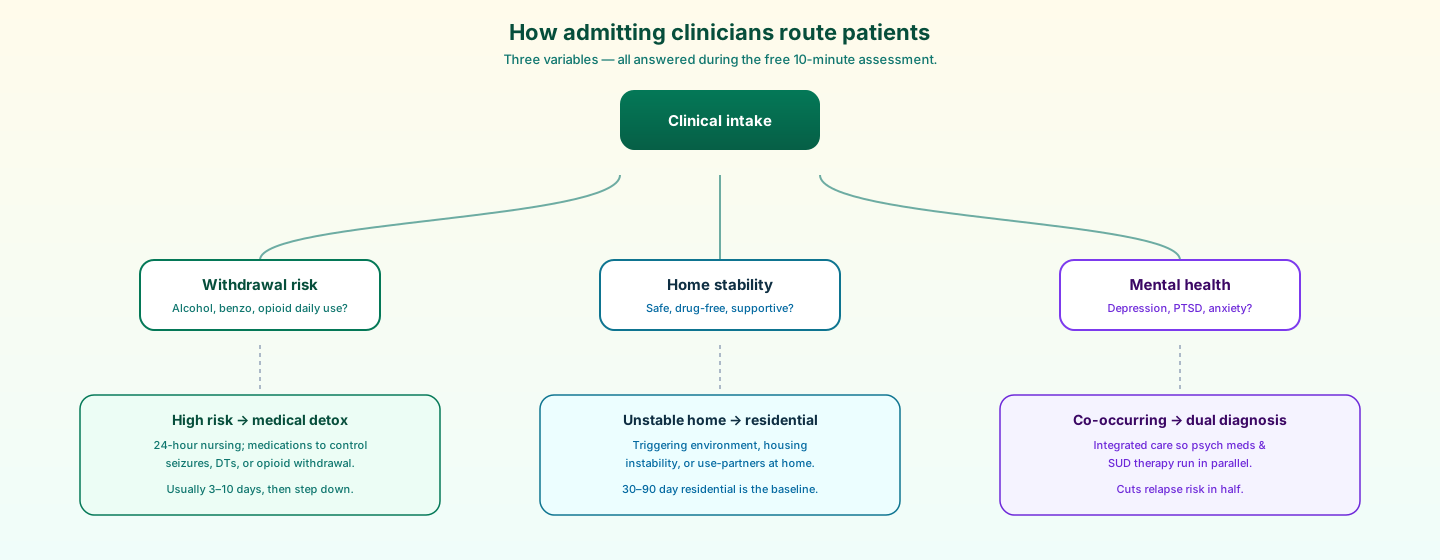
Three clinical variables drive every placement decision — not preference, not price, not convenience. First, withdrawal severity: for alcohol, benzodiazepines, and opioid dependence, unsupervised withdrawal can be medically dangerous — medical detox is almost always indicated first. For stimulants or cannabis, outpatient withdrawal is typically safe.

Second, home-environment stability. If home is sober, supportive, and low-trigger, outpatient or IOP typically works. If home is chaotic, triggering, or unsafe, residential removes the access problem and creates space for recovery. Third, co-occurring conditions: untreated depression, PTSD, or anxiety doubles relapse risk — needs integrated dual-diagnosis care regardless of setting.

Under the federal MHPAEA parity law, commercial insurers (Aetna, BCBS, Cigna, UnitedHealthcare) must cover both options at parity with medical care. Medicaid coverage varies by state — expansion states (CA, NY, CO, OR, WA, others) have broader access. Cost should rarely be the deciding factor — the clinical match determines outcome probability.
When to reassess during treatment
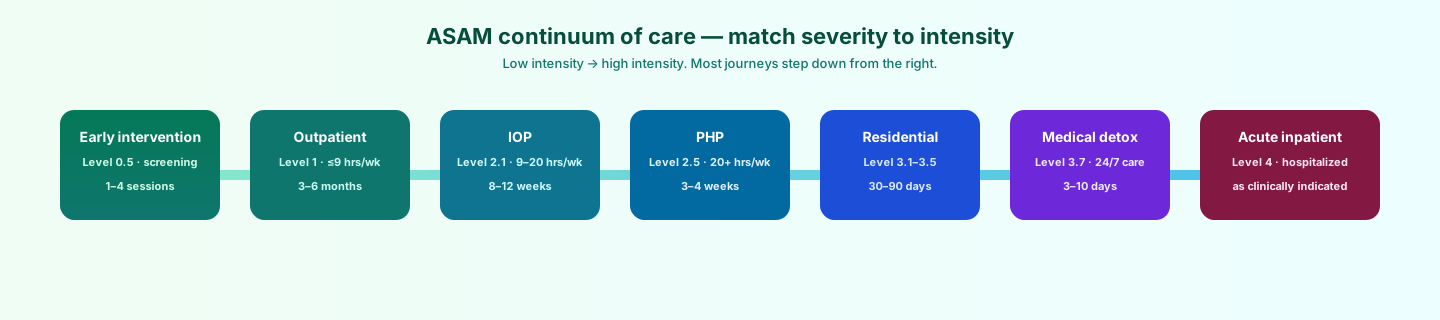
The initial placement is not a permanent verdict. Clinicians reassess weekly during the first month and whenever treatment milestones are hit. A patient starting in detox typically steps down to residential, then to IOP, then to standard outpatient + sober living over 6 to 12 months. Stepping up (not down) is also common — if outpatient isn’t holding, residential becomes appropriate. Flexibility is the norm.
See the full directory for all 21,568 SAMHSA-verified centers offering both options, or browse by state to narrow to your geography. Every listing shows accepted insurance, level-of-care offerings, and accreditation status, and connects directly to the facility’s own phone — or to our (833) 567-5838 placement helpline if you want a clinician to filter for you.