12 steps to work through
Each section below answers one specific question about the recovery journey. Skim if you know what you are looking for; read in order if this is new territory. Written for anyone considering rehab for themselves or a loved one — evidence-based, no sales script.
2. Check accreditation and state licensure
Look for The Joint Commission (JCAHO) or CARF accreditation — independent bodies that audit clinical quality, safety, and outcomes on-site. Verify state licensure through your state health or substance-use agency (every state lists licensed providers publicly). Accreditation is not a marketing badge: unaccredited programs answer to no external reviewer. Every listing in our directory is sourced from the SAMHSA federal registry, and accreditation is shown on facility profiles where held.
3. Verify staff credentials and medical coverage
A legitimate rehab facility employs licensed clinicians — physicians (ideally board-certified in addiction medicine), registered nurses, licensed therapists (LCSW, LPC, LMFT), and certified addiction counselors. Ask two specifics: what is the staff-to-patient ratio, and is medical staff on-site 24/7 or on-call (for detox and residential, 24/7 nursing matters). Programs staffed mostly by recovery coaches without licensed clinical oversight cannot safely manage withdrawal, psychiatric medication, or co-occurring conditions.
Need personalized guidance?
Our specialists can help you navigate your options — free and confidential.
(833) 567-5838
4. Demand evidence-based treatment — including MAT
The foundation should be therapies with research behind them: cognitive behavioral therapy (CBT), dialectical behavior therapy (DBT), motivational interviewing, contingency management, and family therapy. For opioid use disorder, medication-assisted treatment (buprenorphine, methadone, naltrexone) is the gold standard — NIDA lists medication as a core principle of effective treatment. A program that refuses MAT on philosophical grounds, or relies on a single approach for everyone, is running on ideology rather than evidence. Holistic extras (yoga, art, equine) are fine as complements, never as the core.
5. 12 questions to ask a rehab facility before admitting
Wondering how to pick a rehab facility without a medical background? Ask every program the same twelve questions and compare answers side by side. Legitimate rehab facilities answer all twelve without pressure tactics; evasive answers on licensing, costs, or MAT are disqualifying.
1. Are you licensed and accredited?
State licensure plus Joint Commission or CARF accreditation — verify both, not just the marketing badge.
2. What levels of care do you offer on-site?
Detox through outpatient under one roof means smoother step-downs without changing providers.
3. Do I get a formal ASAM assessment before placement?
Placement should follow a clinical assessment — not the price of the bed they want to fill.
4. Who provides medical care, and is nursing 24/7?
For detox and residential, round-the-clock nursing is a safety requirement, not a luxury.
5. Do you offer MAT — all three medications?
Buprenorphine, methadone access, and naltrexone. A blanket no for opioid patients is disqualifying.
6. What therapies make up a typical week?
Ask how many individual sessions — some programs run almost entirely on group hours.
7. Do you treat co-occurring mental-health conditions?
Depression, anxiety, PTSD and trauma treated on-site, or you will be juggling two providers.
8. What will my insurance cover — in writing?
Exact out-of-pocket estimate before admission. Verbal promises about coverage do not count.
9. How long is the recommended program?
And what clinically determines discharge — a calendar date or measured progress?
10. What does the written aftercare plan include?
Outpatient step-down, support groups, sober living options, MAT continuation — named, not vague.
11. Can my family participate?
Family therapy and structured visitation measurably improve long-term outcomes.
12. What happens if I relapse during treatment?
The answer reveals the philosophy: clinical adjustment and support, or discharge and blame.
6. What to look for in a rehab facility: green flags
Beyond the basics, the strongest programs share visible markers: individualized treatment plans reviewed weekly (not one-size-fits-all schedules), co-occurring disorder care under one roof, family programming, a defined alumni network, transparent pricing before admission, staff who ask about YOUR situation before selling, and a written aftercare plan started at intake — not at discharge. Length matters too: NIDA research finds outcomes improve when total treatment (across levels) reaches about 90 days — a good facility plans the step-down path (residential to IOP to outpatient), not just the first 28 days.
7. Red flags: how to spot predatory rehab programs
The treatment industry has a documented dark side — the FTC has issued consumer warnings about deceptive addiction-treatment marketing. If the process feels like a sales funnel rather than a clinical intake, it is one.
Patient brokering
Someone offers to fly you for free to a distant program that takes your insurance. Brokers are paid per admission — a felony in several states. Never accept travel from a program that recruited you.
Too-good-to-be-true promises
Guaranteed cures, guaranteed sobriety timelines, or success rates above 90% with no published methodology. No legitimate provider guarantees recovery.
Money and billing warning signs
Refusal to disclose costs in writing, waived deductibles you did not ask about, and excessive urine-testing schedules — a known insurance-fraud pattern.
Clinical shortcuts
No licensed medical staff on the roster, blanket refusal of MAT for opioid patients, identical schedules for every client, and pressure to sign today before a bed disappears.
8. How to find a good rehab center near you — or away
Local treatment keeps family close (family involvement measurably improves outcomes) and makes the step-down to outpatient seamless; distance creates separation from triggers, dealers, and using friends. A practical rule: outpatient levels almost always work best near home, while residential can go either way — choose distance if the home environment actively undermines recovery. Browse verified options by state in our state directory or search all 21,000+ facilities by insurance, level of care, and location. Beware free flights to distant programs — that is the patient-brokering pattern above.
9. Match the program to your insurance and budget
Before falling in love with a program, verify the money: is the facility in-network (2-3x cheaper than out-of-network), what is the deductible and out-of-pocket maximum, and does the level of care need prior authorization? Under federal parity law, plans must cover addiction treatment at parity with medical care. Get every cost estimate in writing before admission. Our guides cover how much rehab costs and how to pay, plus plan-specific details for Anthem, Aetna, BCBS, Cigna, UnitedHealthcare, and Medicaid.
10. Compare program length and aftercare before deciding
Thirty days is a starting point, not a finish line — compare 30-day vs 90-day programs and ask how the facility handles step-down. The aftercare plan is where long-term recovery is actually built: outpatient therapy, support groups, sober living if home is unstable, MAT continuation, and relapse-response planning. A facility that cannot describe its aftercare process in specifics is selling you 28 days, not recovery.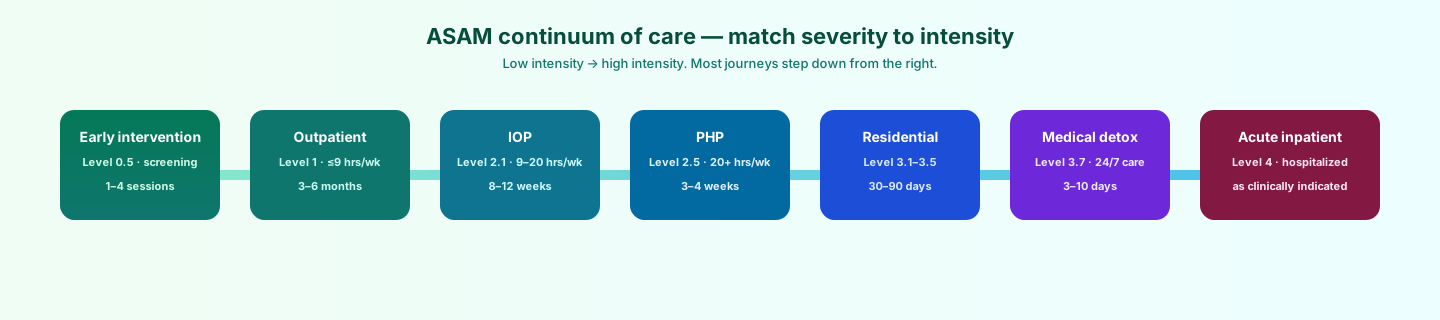 See our relapse prevention guide for what the plan should contain.
11. What to bring to rehab (and what to leave home)
Once admitted, pack light and practical — every facility publishes its own packing list, so ask admissions for it the day you confirm.
Documents and essentials
Government ID, insurance card, a list of current medications in original bottles, pharmacy and emergency contacts on paper, and a small amount of cash.
Clothing
Comfortable, modest clothes for about a week — laundry is available at residential programs. Add sneakers for recreation and layers for season changes.
Toiletries and comfort items
Alcohol-free toiletries only (check mouthwash and aftershave labels), plus reading or journaling materials. Photos of loved ones help on hard days.
What to leave at home
Valuables, revealing clothing, anything containing alcohol, and usually electronics — most residential programs restrict phones in early treatment, so tell family to expect limited contact the first week or two.
12. Choosing for a loved one who resists treatment
If you are choosing on behalf of someone who refuses help, the facility choice matters less than the engagement approach: evidence-based invitational methods like CRAFT engage 64-74% of treatment-refusing people — far more than confrontation. Line up the facility first (bed confirmed, insurance verified) so a yes can be acted on the same day. Our guides on how to help an alcoholic or addict and how to stage an intervention walk the full process, and our free helpline at (833) 567-5838 can shortlist facilities that fit while you focus on the conversation.